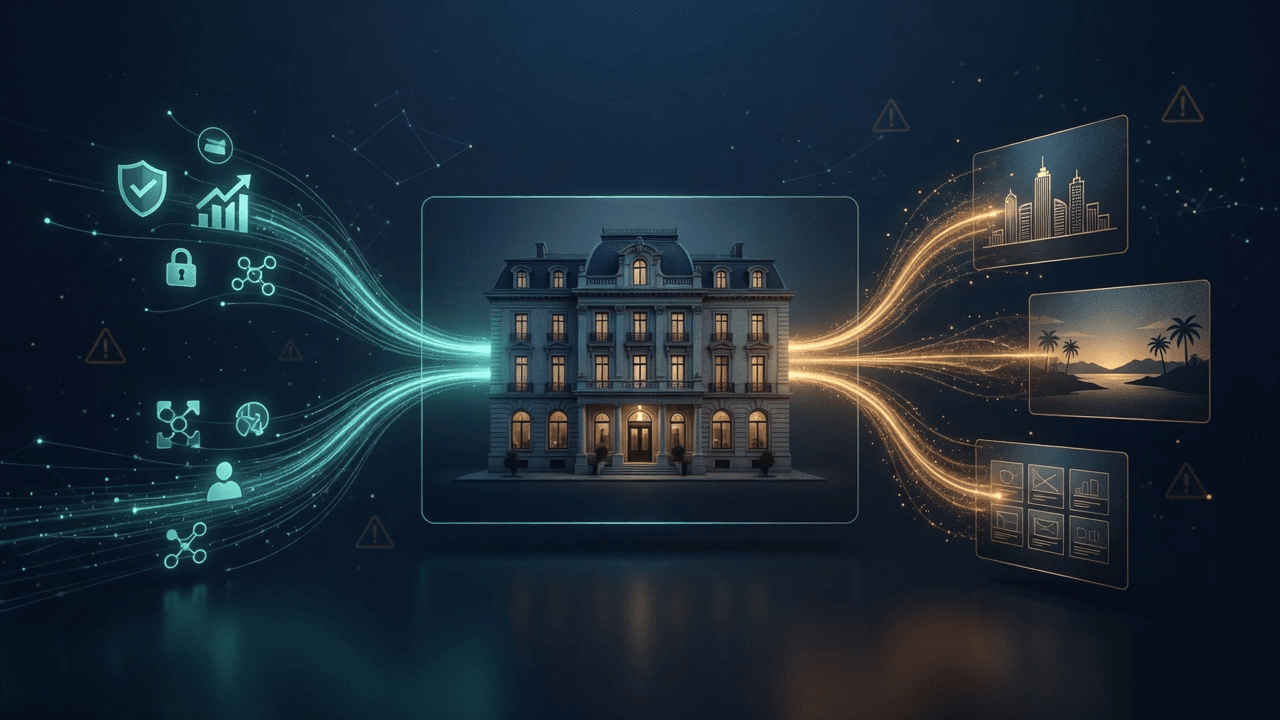
A hotel can be mentioned and still lose the booking path. That is the direct booking risk of AI-assisted travel discovery.
If the answer is shaped by third-party platforms, the traveler may trust an OTA, review site, or directory before they ever reach the official website.
AI answers may shape the traveler before the click
Travelers may ask for recommendations, comparisons, neighborhoods, trip plans, or hotel shortlists. The answer may shape expectations before any website visit.
That makes the source behind the answer commercially important.
Direct booking risk starts with visibility
If a hotel is poorly explained, hard to compare, or missing key trust signals, the traveler may lean toward whichever platform makes the decision easier.
The official website must give a reason to book direct
Direct booking value should be visible in plain language. Hotels can explain flexible help, local team support, packages, loyalty, special offers, group routing, or best available property guidance when applicable.
Connect visibility to revenue
A SalesHospitality review can connect AI visibility readiness to direct booking, lead capture, and follow-up workflow.
Hotels need stronger inquiry paths
Not all revenue arrives through a standard booking engine. Meetings, groups, weddings, corporate travel, sports teams, and extended stays may need visible inquiry paths.
Group and corporate leads need clearer routing
AI-assisted discovery may surface the hotel for a business trip, conference, team stay, or local event. The website should route that demand to the right form, phone number, or sales follow-up process.
Visibility must connect to revenue workflow
Visibility is only useful if the hotel can capture demand. SalesHospitality connects website visibility, lead capture, follow-up, reporting, and revenue action.
What hotels should do next
Review the path from discovery to action. If the official site does not clearly capture booking, group, corporate, or meeting demand, visibility may leak into third-party channels.